Understanding Sensory Processing Disorder (SPD)
If your child melts down over a clothing tag, refuses entire food groups, or can’t sit still for five seconds, you might be dealing with more than “a phase.” Sensory processing disorder spd is a neurological condition that changes how the brain processes sensory information, and it affects far more families than most people realize. This guide walks you through what SPD actually is, how to spot it, and what you can do about it starting today.
Key Takeaways
Sensory processing disorder is a condition in which the brain struggles to organize and respond to sensory input from touch, sound, movement, sight, taste, smell, proprioception, vestibular input, and interoception. It can lead to over- or under-reactions that disrupt everyday life. SPD is common in children with and without autism spectrum disorder.
- SPD affects how the brain processes sensory information from multiple senses, causing children to be overly sensitive, under-responsive, or constantly seeking certain stimuli.
- SPD is not recognized as a standalone diagnosis in DSM-5 or ICD-10, but sensory processing difficulties are widely acknowledged by occupational therapists and directly impact participation at home and school.
- Early intervention through occupational therapy, sensory integration therapy, and structured sensory strategies – including a well-designed sensory diet – can meaningfully improve self-regulation, gross motor skills, fine motor skills, and daily participation.
- Therabridgehub offers online coaching from pediatric occupational, speech, physical, and behavior professionals to help parents understand SPD, build home strategies, and support school readiness and behavioral issues.
What Is Sensory Processing Disorder (SPD)?
Sensory processing disorder affects how the brain processes sensory information – receiving, organizing, and responding to sensory stimuli from the world around us. The concept traces back to Dr. Anna Jean Ayres, an occupational therapist and psychologist who developed sensory integration theory in the 1960s–1970s. Ayres observed that some children’s nervous systems failed to properly filter, modulate, and interpret sensory input, leading to difficulties in motor skills, behavior, attention, and emotional regulation.
Sensory integration is the process by which the central nervous system combines input from touch, vision, hearing, proprioception, vestibular sense, and interoception to guide appropriate responses and motor behavior. When sensory processing breaks down, children can become overly sensitive to ordinary experiences or miss critical sensory information entirely. SPD can cause oversensitivity or undersensitivity to stimuli, and sensory processing disorder can disrupt daily life activities across home, school, and community settings.
Clinicians typically organize SPD into three categories: sensory modulation disorder, sensory based motor disorder, and sensory discrimination disorder. SPD can occur alone or alongside other disorders such as autism spectrum disorder, ADHD, anxiety, and developmental delays, affecting learning, mental health, and social interactions. While SPD is not recognized as an official medical diagnosis in DSM-5 or ICD-10 as of 2026, professional bodies like AOTA and organizations such as the Star Institute and SPD Foundation support occupational therapy and sensory integration therapy approaches. Children are more likely than adults to have sensory processing disorder, though adults can also be affected.
Types and Subtypes of SPD: Modulation, Discrimination, and Motor
Clinicians organize sensory processing issues into three major patterns to guide assessment and effective treatment. Understanding which pattern your child shows helps therapists – and you – choose the right strategies.
Sensory modulation disorder involves difficulty regulating the intensity of sensory experiences. This breaks into three profiles:
- Sensory over responsivity: covering ears at loud noises, gagging at food textures, pulling away from light touch, or having meltdowns in crowded spaces. These children react as though ordinary sensory input is threatening.
- Under-responsivity: missing their name being called, appearing “in their own world,” showing unusually high pain tolerance, or seeming sleepy and disengaged.
- Sensory craving: some children with SPD crave intense thrill-seeking stimuli – constant jumping, spinning, crashing, or seeking deep pressure. These children seem to never get enough movement.
Sensory discrimination disorder means difficulty telling differences between similar sensations. A child might confuse letters with similar shapes due to visual discrimination issues, struggle to distinguish light from firm touch, or have trouble locating where on their body they were touched. This impacts handwriting, reading, and coordination.
Sensory based motor disorder includes postural disorder – poor core strength, slumping at a desk, fatigue during PE – and dyspraxia, which involves difficulty planning and sequencing novel motor tasks like riding a bike, hopping, or tying shoes. Children with SPD may have trouble holding a pencil or scissors because of these motor planning challenges.
Children often show a mix of these patterns, and occupational therapy and sensory integration therapy use this classification to individualize treatment and home programs.
Common Signs and Symptoms of SPD in Everyday Life
SPD signs are most visible during daily routines – dressing, mealtimes, play, school, and outings.
Children with sensory over responsivity may show fear of swings or escalators, meltdowns in noisy cafeterias, distress over clothing tags or tooth brushing, and strong reactions to certain smells or food textures. Children with SPD may overreact to sounds and textures that others barely notice, and sudden movements in their environment can trigger alarm.
Under-responsive children can seem disconnected. They may have a slow response to their name, appear unmotivated, miss details in the environment, or tolerate bumps and falls without flinching. Parents often describe these children as “hard to read.”
Sensory seeking looks like constant jumping, spinning, crashing into furniture, chewing on clothing, touching everything in stores, and seeking tight hugs or roughhousing. These children’s bodies seem to need far more sensory experiences than their peers.
Motor and functional signs include clumsiness, frequent tripping, difficulty with gross motor skills like catching a ball or climbing stairs, messy handwriting, and challenges with buttons and zippers. Self-care independence often lags behind.
SPD symptoms can include sudden mood swings and strange reactions that adults misread as defiance. SPD can cause low self-confidence and social isolation in children who avoid birthday parties, playground games, or cafeteria seating because of sensory overload. Frequent meltdowns after school, difficulty transitioning between activities, and apparent behavioral issues are often sensory coping attempts rather than willful opposition.

SPD Across the Lifespan: Babies, Children, Teens, and Adults
Sensory processing difficulties look different at each developmental stage, from NICU history through adulthood.
In infants and toddlers, early signs include difficulty tolerating touch or diaper changes, extreme reactions to baths, poor sleep, and feeding issues like gagging on textures or refusing lumpy foods. Preemies and NICU graduates are at higher risk for sensory challenges, and delayed developmental milestones in motor or self-regulation may be the first clue.
Preschool and early school-age children struggle with group circle time, sitting still, messy play, and early fine motor skills. Late toilet training and toe walking are common flags. These children may resist playground activities other kids enjoy.
In middle school and teen years, sensory fatigue in noisy hallways, anxiety triggered by sensory overload, picky eating that affects social life, and interoception-related body image concerns become more prominent. School readiness for higher academic demands and executive function challenges compound the picture, making it harder for a child to stay focused.
Adults with longstanding but undiagnosed SPD often describe overwhelming work environments – open offices, fluorescent lights – and social avoidance due to sensory differences. Chronic stress and links to mental health conditions like anxiety and depression are well-documented. Research shows that environmental factors in adulthood can amplify or ease lifelong sensory sensitivities.
Early intervention is ideal, but meaningful progress is possible at any age through occupational therapy, environmental accommodations, and coaching. Sensory processing differences do affect people across the entire lifespan.
Relationship of SPD to Autism, ADHD, Anxiety, and Other Disorders
Sensory differences are extremely common in autism spectrum disorder and ADHD, but they also appear in children with no other diagnosis. SPD is often linked with autism spectrum disorder – roughly 90% of children with ASD show hyper- or hypo-reactivity to sensory input. About 16.5% of children in the general population show elevated sensory over-responsivity behaviors even without an ASD or ADHD diagnosis.
Children with SPD may also have ADHD or anxiety disorders. In ADHD, difficulty filtering background noise, constant movement to stay alert, and sensory over responsivity or under-responsivity can be misinterpreted as “inattention” or “oppositional behavior.” SPD can coexist with food intolerances and behavioral disorders, further complicating the clinical picture.
Chronic sensory overload can trigger or worsen anxiety, school refusal, and sleep problems. Recent pediatric research from 2023–2025 connects atypical sensory processing with emotional regulation difficulties and broader mental health outcomes. Sensory issues may also coexist with developmental disabilities, learning disorders, tongue tie affecting feeding, toe walking associated with proprioceptive differences, and fragile x syndrome.
A thorough evaluation by healthcare providers aims to understand the whole child – sensory, cognitive, emotional, and motor – rather than viewing SPD in isolation. Organizations like the Child Mind Institute emphasize that symptoms related to sensory processing often cross diagnostic boundaries, and the goal is to help each child learn to participate fully regardless of labels.
How SPD Is Assessed: Questionnaires, Observation, and Clinical Evaluation
There is no single blood test or brain scan for SPD. No single test exists to diagnose sensory processing disorder, and it is not currently an official medical diagnosis in the DSM-5. Diagnosis is primarily done by occupational therapists with advanced training in sensory integration.
The process begins with a detailed history – birth circumstances, feeding milestones, motor development, and current daily lives at home and school. Family physicians and pediatricians often refer families to occupational therapy for this evaluation.
Standardized tests and observational scales are used for diagnosis. Parents and teachers complete questionnaires like the Sensory Profile or Sensory Processing Measure, rating behaviors such as sound sensitivity, movement seeking, and tactile defensiveness across settings.
Clinical observations assess reactions to sensory stimulation directly. An occupational therapist watches how the child responds to specific sensory input – swings, balance boards, tactile bins – noting registration thresholds, modulation, and motor planning. Diagnosis may involve free-play observation in various environments, including classroom or playground settings.
Standardized motor and perceptual tests help distinguish sensory based motor disorder from purely strength-based issues, assessing fine motor skills, visual perception, and praxis.
Because SPD is not a DSM-5 diagnosis, reports typically frame findings as “sensory integration difficulties” or “sensory processing challenges.” These labels still guide school supports, IEP planning, and therapy goals. A systematic review of assessment tools shows there is a significant difference in outcomes when evaluation is thorough and individualized.
How Therapists Help: Occupational Therapy and Sensory Integration Therapy
Occupational therapy is the primary profession addressing SPD, with a focus on helping children participate in daily activities – play, self-care, school tasks, and social interactions.
Sensory integration therapy is the most common treatment for SPD. It uses child-led, play-based sessions involving swings, climbing equipment, obstacle courses, and tactile materials to provide “just right” challenges. The goal is to help the nervous system develop ways to process and organize sensory input more efficiently, building appropriate responses over time. Therapy sessions are tailored based on individual sensory sensitivities – deep pressure and proprioceptive input for regulation, balance work for vestibular processing, and praxis tasks for motor planning.
Occupational therapy can help improve fine and gross motor skills, self-regulation, and participation. An occupational therapist may also collaborate with speech therapy for language challenges, physical therapy for gross motor coordination, and behavior therapy when behavioral issues coexist – creating a coordinated plan for sensational kids who need support across domains.
Research on sensory integration therapy from studies like the SenITA RCT shows promising but mixed results. High-quality programs use clear goals, measurable outcomes, and family education rather than generic “sensory play.” Early therapy is key for effectively treating sensory processing disorder, as younger nervous systems show greater neuroplasticity.
Variable insurance coverage and long waitlists remain real barriers – which is precisely why complementary options like online coaching and home-based programs matter.
How Therabridgehub Online Coaches Support Families Living With SPD
Therabridgehub is an online platform connecting parents with pediatric occupational, speech, physical, and behavior therapists for video-based coaching related to SPD and associated challenges. Coaches help families bridge the gap between clinical recommendations and daily lives at home.
Therabridgehub coaches do not replace in-person medical evaluation. Instead, they help parents interpret reports, understand sensory patterns, and translate recommendations into realistic routines. Concrete use cases include:
- Preparing questions for an upcoming OT evaluation
- Troubleshooting school readiness challenges (sitting for circle time, handwriting, classroom noise)
- Addressing feeding, picky eating, and food-related sensory processing issues
- Managing bowel, bladder, and pelvic floor concerns such as constipation linked to interoception
- Coaching on toe walking, coordination, and sensory craving behaviors
Sessions might involve reviewing video clips of the child, co-creating visual schedules, designing a sensory corner at home, brainstorming strategies for community outings, or coaching parents on co-regulation during meltdowns. Coaches can also provide treatment planning support and help parents develop their own coping skills.
Advantages include flexible scheduling, the ability to book single or ongoing sessions, and access for families in areas without local pediatric specialists or those waiting for insurance-approved therapy. For many parents, Therabridgehub serves as a bridge between formal therapy, school services, and the daily parenting decisions that affect people navigating sensory needs.
Home Strategies and School Supports for Children With SPD
Small, consistent changes at home and school can ease sensory overload and reduce behavior challenges. You don’t need a complete renovation – you need the right adjustments.
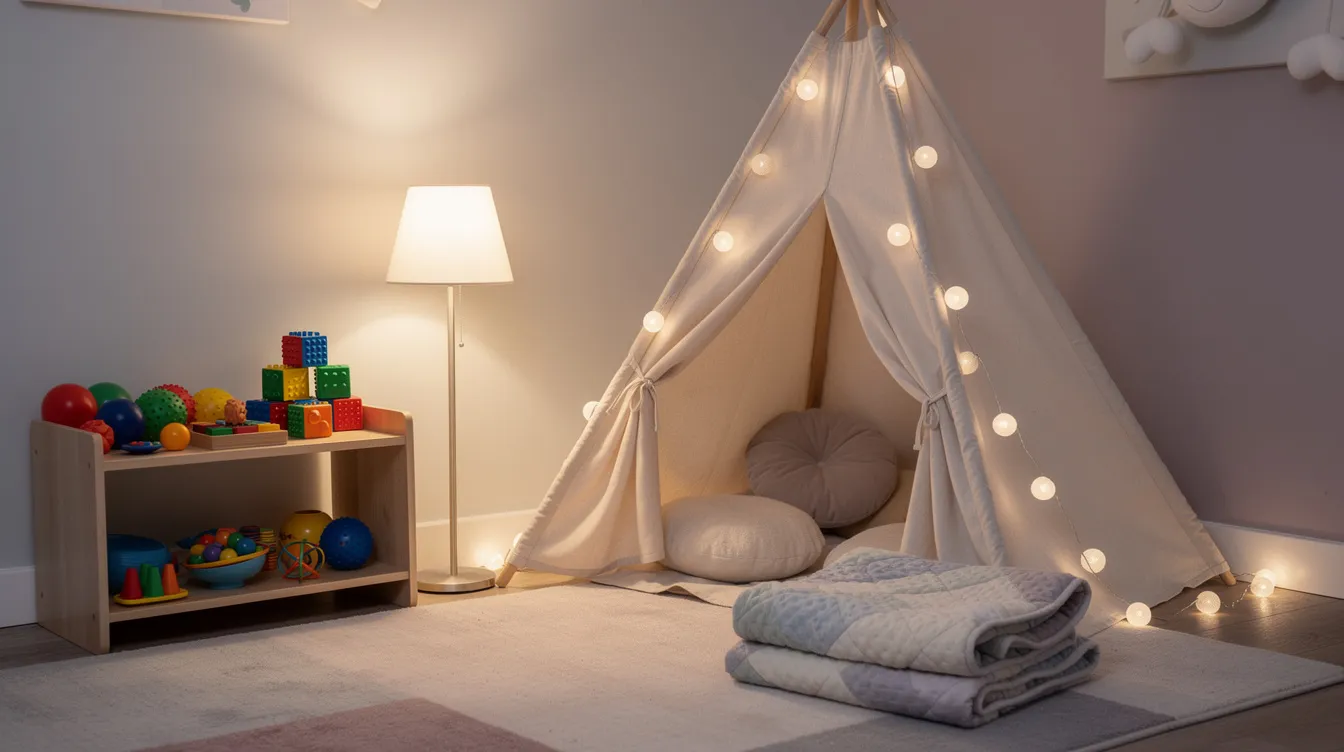
At home, prioritize predictable routines and visual schedules. Create a quiet “sensory break” space, adjust lighting and noise levels, and let your child choose comfortable clothing. Embed movement breaks before demanding tasks like homework or meals – even two minutes of wall push-ups or jumping can help a child learn to regulate.
Sensory modulation supports include noise-reducing headphones, chewy jewelry, weighted lap pads, and fidget toys. Heavy work activities – carrying groceries, pushing laundry baskets, climbing stairs with a loaded backpack – provide proprioceptive input that helps many children settle. These tools help maintain personal space awareness and reduce the impact of untreated SPD on self esteem.
At school, collaborate with teachers to request accommodations through IEP or 504 plans:
Accommodation | Purpose |
|---|---|
Movement breaks every 30 minutes | Reduce restlessness, improve focus |
Flexible seating (wiggle cushions, standing desks) | Support postural disorder and attention |
Noise-reducing headphones | Buffer sensory overload from loud noises |
Calm corner access | Allow self-regulation during overwhelm |
Alternative testing environment | Reduce sensory distractions |
Support social skills and peer understanding by teaching your child to self-advocate: “I need a break from noise.” Prepare for fire drills or assemblies in advance. Work with teachers to avoid mislabeling sensory behaviors as defiant. Therabridgehub coaches can help you prioritize which changes to make first and communicate effectively with school teams.
What Is a Sensory Diet and How Does It Help?
A sensory diet is not about food. It’s a planned schedule of sensory activities designed by an occupational therapist to give the nervous system the right kinds of input across the day. A sensory diet includes customized sensory activities for daily life, matched to each child’s unique profile.
Key components target multiple senses through proprioceptive, vestibular, tactile, visual, and oral activities woven into natural routines: Below is an example of a Sensory Diet.
- Morning: trampoline jumping, animal walks, or resistive exercises to provide treatment-level alerting input
- School commute: heavy backpack walks or carrying items
- During school: scheduled “jobs” like carrying books, chair push-ups, or using one sense at a time for focused tasks
- After school: swinging, biking, or climbing to discharge built-up sensory tension
- Before homework: deep pressure activities (bear hugs, weighted blanket)
- Bedtime: calm deep-breathing exercises, dim lights, gentle rocking
Sensory diets are tailored to the child’s specific SPD pattern. Over-responsive systems benefit from slow, calming input. Under-responsive systems need more intense, alerting activities. Sensory seekers require structured movement throughout the day.
Benefits documented in clinical practice include improved focus, fewer meltdowns, better participation in handwriting and feeding, and enhanced self-awareness of sensory needs over time. A school-based study found that sensory activity schedules administered three times daily reduced disruptive behavior and increased on-task performance.
Therabridgehub coaches can help families interpret an existing OT-designed sensory diet, troubleshoot when it’s not working, or prepare parents to request one from their child’s therapist. Early diagnosis of sensory patterns makes sensory diets more targeted and effective.

When to Seek Help and What Parents Most Often Ask
Trust your instincts. If daily lives feel consistently harder than they should because of sensory challenges – even if others say your child will “grow out of it” – it’s worth investigating.
Red flags include frequent meltdowns triggered by routine tasks, avoidance of school or community activities due to sensory overload, persistent delays in gross motor or fine motor skills, extreme picky eating, social isolation, or toileting issues linked to sensory awareness.
Parents commonly ask: “Is this just behavior or SPD?” The answer is that behavior and sensory are intertwined – many behavioral issues are actually sensory coping attempts. “Does SPD mean my child is autistic?” SPD can occur with or without autism; an early diagnosis of both conditions helps, but they are distinct. “Will my child ever tolerate haircuts, birthday parties, or school assemblies?” Progress is typically gradual but real. “Should we push or accommodate?” A balanced approach blends compassionate accommodations with gently expanding the child’s comfort zone, guided by developed ways of tracking what works.
A practical next-step roadmap:
- Talk to your pediatrician or family physicians
- Request an occupational therapy evaluation
- Gather teacher input on classroom behavior
- Book a Therabridgehub coaching session to prepare questions and organize observations
Understanding SPD is a learning journey. You do not have to navigate it alone – support networks and professional guidance from platforms like Therabridgehub are available, and even small steps forward make a significant difference.
FAQ About Sensory Processing Disorder (SPD)
Is SPD something my child will outgrow, or is it lifelong?
Many children’s sensory systems mature with time, especially with early intervention and consistent sensory strategies. However, some individuals continue to experience milder sensory differences into adulthood and benefit from ongoing self-awareness and environmental accommodations. The key is building coping skills and self-advocacy early so that sensory processing issues become manageable rather than limiting.
Can online coaching really help if my child is not in the same room as the therapist?
Online coaching is parent-centered rather than hands-on with the child. Coaches at Therabridgehub guide caregivers in understanding patterns, setting up environments, choosing activities, and responding during real-life situations. This approach often has more day-to-day impact than weekly clinic sessions alone because it empowers the people who are with the child every single day.
Does too much screen time cause SPD?
Current evidence does not show screens as a direct cause of SPD. However, heavy early screen exposure – especially before age two – may interfere with sensory-rich play and movement, potentially affecting attention, sleep, and regulation. The recommendation is balanced, age-appropriate limits combined with plenty of real-world sensory experiences involving multiple senses.
How is a sensory meltdown different from a tantrum?
Meltdowns are involuntary overload responses where the nervous system – including the sympathetic and parasympathetic nervous systems – is overwhelmed by sensory input. They require safety, calming support, and time. Tantrums are more goal-driven behaviors that usually shift when the child’s demand is met or limits are clearly held. Recognizing this distinction prevents misinterpreting a distressed child as manipulative.
Can SPD affect toileting and constipation?
Interoception and tactile sensitivities can make it hard for children to notice body signals or tolerate sitting on the toilet, contributing to constipation or withholding. Occupational therapists and pelvic floor specialists can address these issues directly, and Therabridgehub coaches can help parents set up gentle routines, visual supports, and environmental accommodations to make toileting less stressful.